
Once the sun goes down, Namba changes character. Shop shutters roll halfway up over ramen counters, izakaya lanterns flicker on, and the Dotonbori canal fills with the reflected glow of signs that have marked this stretch of Osaka since the 1930s. This Osaka nightlife guide covers the main nightlife areas around Namba station, from the crowded canal walk to the quieter alleys just behind it, along with practical notes on trains, costs and etiquette so a first night out goes smoothly.
Getting to Namba, Osaka’s Nightlife Hub
Namba is the anchor station for this entire area, and it is unusually well connected for a single stop. The Midosuji subway line, Osaka Metro’s Sennichimae and Yotsubashi lines, Nankai Electric Railway, the Kintetsu Namba Line and a JR Namba station on the Yamatoji Line all converge within a few minutes’ walk of each other. Visitors arriving from Kansai International Airport can take the Nankai Airport Express Rapi:t directly to Namba, while those coming from Kyoto or Shin-Osaka usually change onto the Midosuji Line at Umeda or Shinsaibashi.
An ICOCA IC card, or any nationally compatible IC card such as Suica or Pasmo, covers every train and subway line mentioned in this guide, so there is no need to buy separate paper tickets for a night that involves several short hops between areas.
Dotonbori After Sunset
The Canal and Its Famous Signs
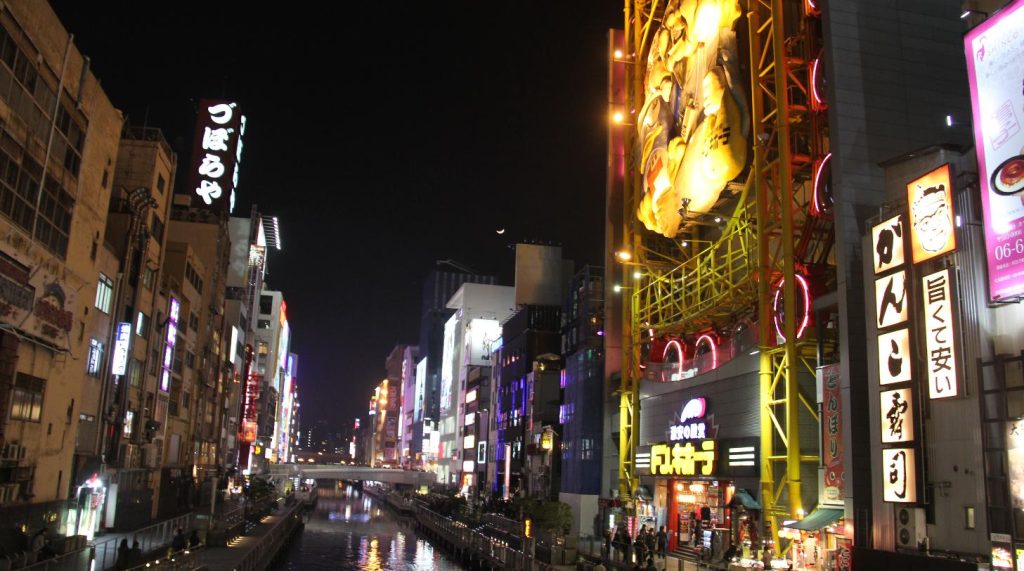
Dotonbori is the pedestrian street that runs along the north side of the Dotonbori canal, and it is usually the first stop for anyone exploring Namba at night. The street is best known for its wall of illuminated signage: the running Glico Man billboard, the mechanized crab above Kani Doraku, and the giant blowfish lantern outside Zuboraya are long-standing landmarks that light up as soon as it gets dark. Some restaurants along the canal stay open into the early hours, so the street rarely feels empty, even on weeknights.
Late-Night Food Along the Water
This is Osaka’s street food district, and takoyaki (grilled octopus balls) and okonomiyaki (savoury cabbage pancakes) are the two dishes most associated with it. Stalls and small counters along Dotonbori and the parallel streets sell both late into the evening, and standing-only counters make it easy to try a few different shops in one night rather than committing to a full sit-down meal at just one place.
Hozenji Yokocho: A Quieter Side of Namba
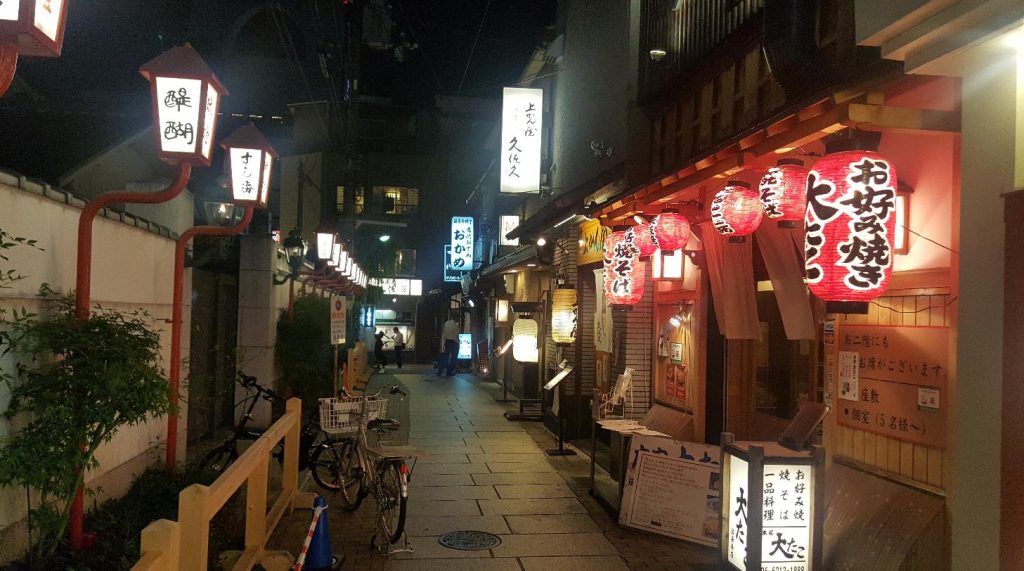
Just south of Dotonbori, a narrow stone-paved alley leads to Hozenji, a small moss-covered temple, and the passage around it known as Hozenji Yokocho. Rows of paper lanterns hang above the doorways of small, family-run restaurants, many of which seat only a handful of people at a counter. It is a good contrast to the noise of Dotonbori and worth the short detour, even just to see the temple’s moss-covered Fudo Myoo statue, which visitors traditionally splash with water rather than photograph with flash.
Shinsaibashi and Amerikamura
Shinsaibashi-suji Shopping Arcade
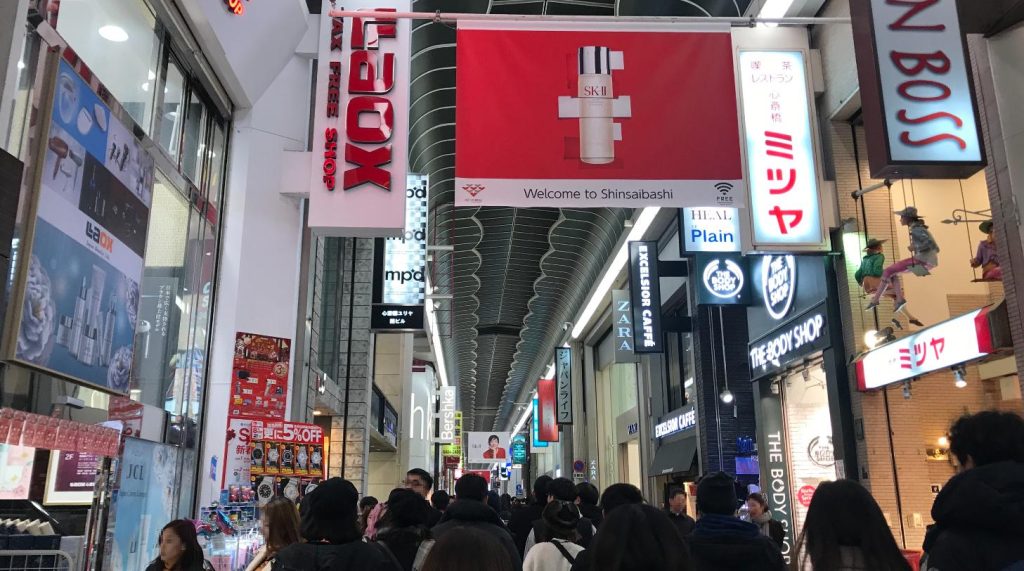
North of Dotonbori, the covered Shinsaibashi-suji arcade runs for roughly 600 metres and stays busy well into the evening, since its roof keeps shoppers dry regardless of weather. It mixes international fashion chains, cosmetics stores and department stores, and while most individual shops close by around 20:00 to 21:00, the arcade itself is a pleasant, well-lit place to walk between dinner and a bar.
Amerikamura for a Younger Crowd
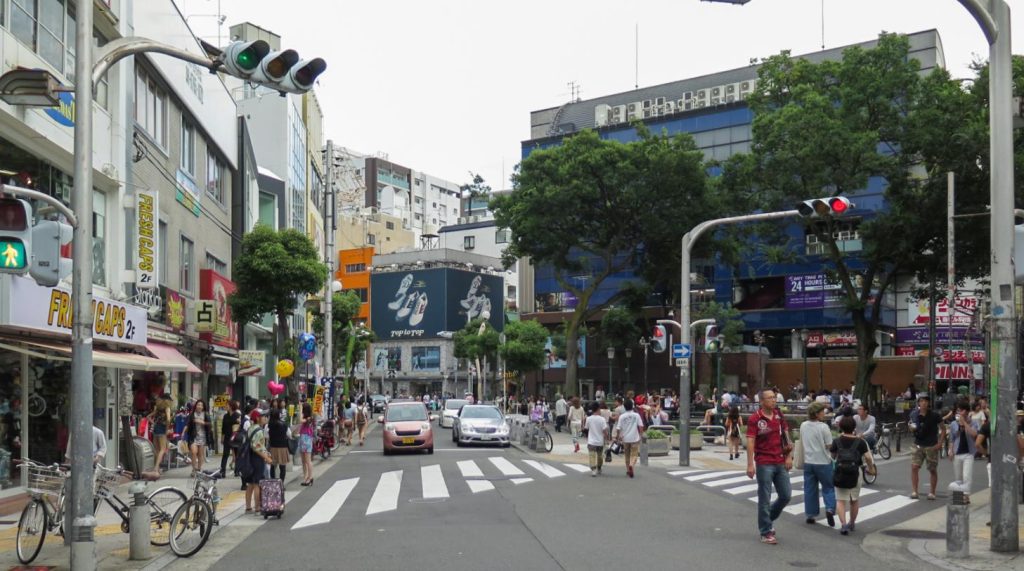
West of Shinsaibashi, Amerikamura, often shortened to Amemura, is Osaka’s answer to Tokyo’s Harajuku: a compact grid of streets filled with vintage clothing stores, streetwear shops and casual bars. Triangle Park, the small plaza at its centre, is a common meeting point in the evening, and the area has a younger, more casual energy than Dotonbori.
Where to Drink: Izakaya, Standing Bars and Rooftop Views
Namba has options for almost any style of night out. Standing bars (tachinomi) around Dotonbori and Shinsaibashi are inexpensive and sociable, and it is common to move between two or three in one evening. Izakaya, Japan’s version of a pub, usually charge a small seating fee (otoshi) that comes with a starter dish, and most in this area have English or picture menus given how central it is for tourism. For something calmer, several hotel bars near Namba and Shinsaibashi offer skyline views without the queues found at more famous observation decks.
Practical Tips for a Night Out in Namba
Last Trains and Getting Home
Most subway and private railway lines in Osaka stop running between roughly midnight and 1:00 a.m., and there is no all-night train service. If a night is likely to run late, it is worth checking the last train time for a specific line in advance, since missing it usually means a taxi back to the hotel. Taxis are metered, plentiful around Namba, and safe to use late at night.
Etiquette and Common Mistakes
Eating or drinking while walking through the busiest stretch of Dotonbori is generally frowned upon, since the street gets extremely narrow at peak times; most people step to the side or find a bench first. Smoking is restricted to designated areas rather than allowed on the open street. It is also worth knowing that some multi-storey buildings in Namba house both ordinary restaurants and separately run nightlife venues, so it is sensible to confirm any cover charge before sitting down somewhere that does not display prices clearly, particularly around the edges of Dotonbori late at night.
Money and Safety
Cash is still useful even though most restaurants, convenience stores and train gates in this area accept IC cards or contactless payment. Namba is generally very safe to walk around at night, including for solo travellers, though the usual precautions around belongings in crowded areas still apply.
Advantages and Disadvantages of a Dotonbori Night Out
The area’s biggest advantage is density: within a ten-minute walk, it is possible to see illuminated landmarks, eat a full meal from street stalls, browse a covered shopping arcade and end the night at a quiet bar. Everything is walkable, well lit and served by trains running until around midnight.
The main disadvantage is crowding. Dotonbori’s main street can feel overwhelming on weekend nights, especially during cherry blossom season or summer festivals, and popular food stalls often have short queues even late in the evening. Travellers who prefer a slower pace may want to prioritise Hozenji Yokocho or Amerikamura over the main canal street, or visit Dotonbori earlier in the evening before it reaches its busiest point.
Advice for Different Types of Visitors
Families with children will find the main Dotonbori strip manageable earlier in the evening, before around 9:00 p.m., when it is busy but not overwhelming, and Shinsaibashi’s covered arcade is an easy, weatherproof place to walk. Solo travellers can comfortably eat at standing counters or counter-seating izakaya, where eating alone is completely normal in Japan. Couples looking for something quieter than Dotonbori’s crowds will likely prefer Hozenji Yokocho or a hotel bar near Shinsaibashi. Groups of friends are well suited to Amerikamura’s casual bars or an izakaya with private seating, which is usually easy to book on the same day outside of major holidays.
Frequently Asked Questions
Is Dotonbori worth visiting more than once during a trip?
Many visitors pass through Dotonbori several times, since it connects Namba station to Shinsaibashi and Amerikamura. Seeing it once after dark for the lights is worthwhile, and a second, earlier visit is a good time to actually sit down and eat.
What time do the neon signs turn on?
Most of the illuminated signage along the canal lights up from dusk and stays on until the shops beneath them close, generally late into the evening.
Is it safe to walk around Namba alone at night?
Yes, this is one of the busiest and best-lit districts in Osaka, and it is well used by solo travellers and locals alike. Standard precautions around belongings in crowds still apply.
Do I need cash for izakaya and street food stalls?
Most accept IC cards or contactless payment, but some smaller stalls take cash only, so carrying some yen is a good backup.
How late do trains run from Namba?
Most lines run until roughly midnight to 1:00 a.m.; checking the specific last train time for your line before a late night out is recommended.
Is Amerikamura only for younger visitors?
No, but its shops and bars are aimed at a younger, streetwear-focused crowd, so visitors looking for a quieter or more traditional evening may prefer Hozenji Yokocho instead.
Planning the Rest of Your Osaka Evening
A night in Namba works well as a self-contained loop: start at Dotonbori for the lights and street food, detour into Hozenji Yokocho for something quieter, then finish in Shinsaibashi or Amerikamura depending on the mood. For more on eating around the city, see our Osaka category page, and check the Food & Dining section for other food-focused guides as they are added to the site.